
Soil Health

The health of soil relates to its ability to perform ecosystem functions and is an integration of its physical, chemical and biological components. While hard to define and harder to measure, three soil health metrics are measured twice a year for the duration of this project to capture any trends or changes over time between tillage treatments.
- Carbon mineralization potential via 24-hour CO₂ burst test
- Aggregate stability
- Organic carbon (added in 2023)
These three metrics are recommended by the Soil Health Institute based on their analysis of many soil health measurements.
These three soil health metrics have been measured at the Digital Fields Farm to evaluate changes in soil health in relation to management systems.

Carbon Mineralization Potential
Carbon mineralization potential is a biological soil health indicator that measures the amount of carbon dioxide (CO₂) released by soil microorganisms as they decompose organic matter (soil respiration). This process reflects microbial activity and the availability of organic carbon that can be converted into plant-available nutrients. In this study, carbon mineralization was assessed using the 24-hour CO₂ burst test, which measures microbial respiration during a standardized incubation period. The amount of CO₂ released provides an indication of the activity of the soil microbial community and its capacity to decompose readily available organic matter. Higher carbon mineralization values generally indicate a more biologically active soil with greater potential for nutrient cycling, improved soil fertility and long-term soil productivity.
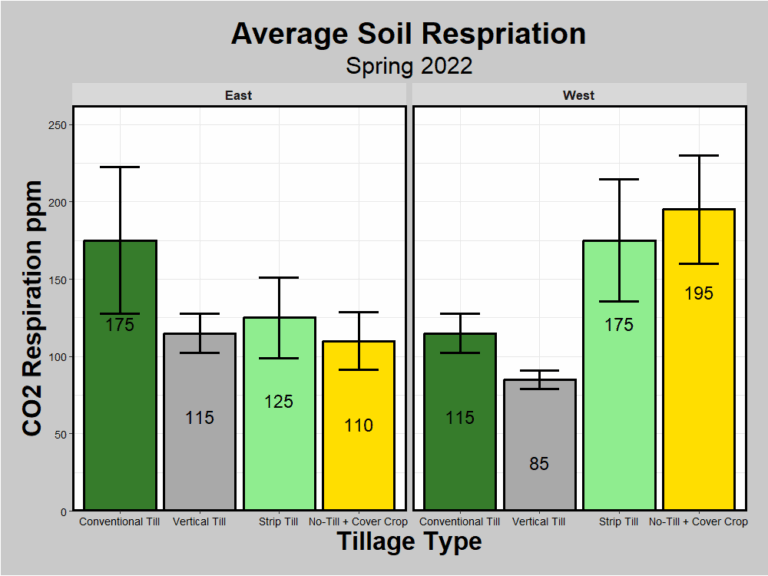
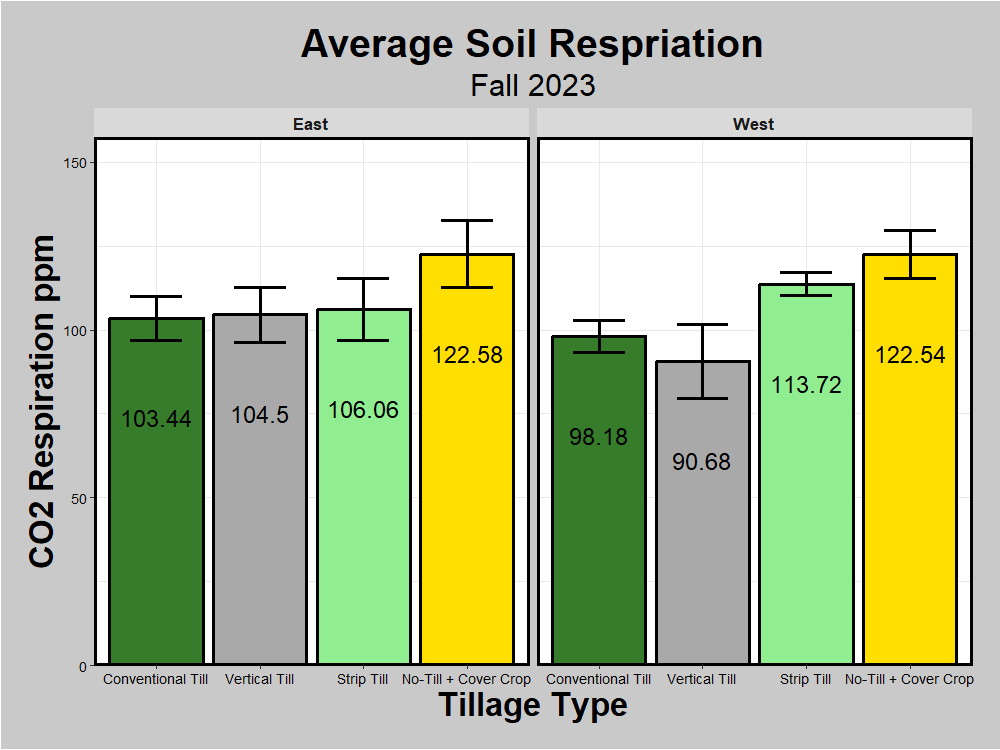
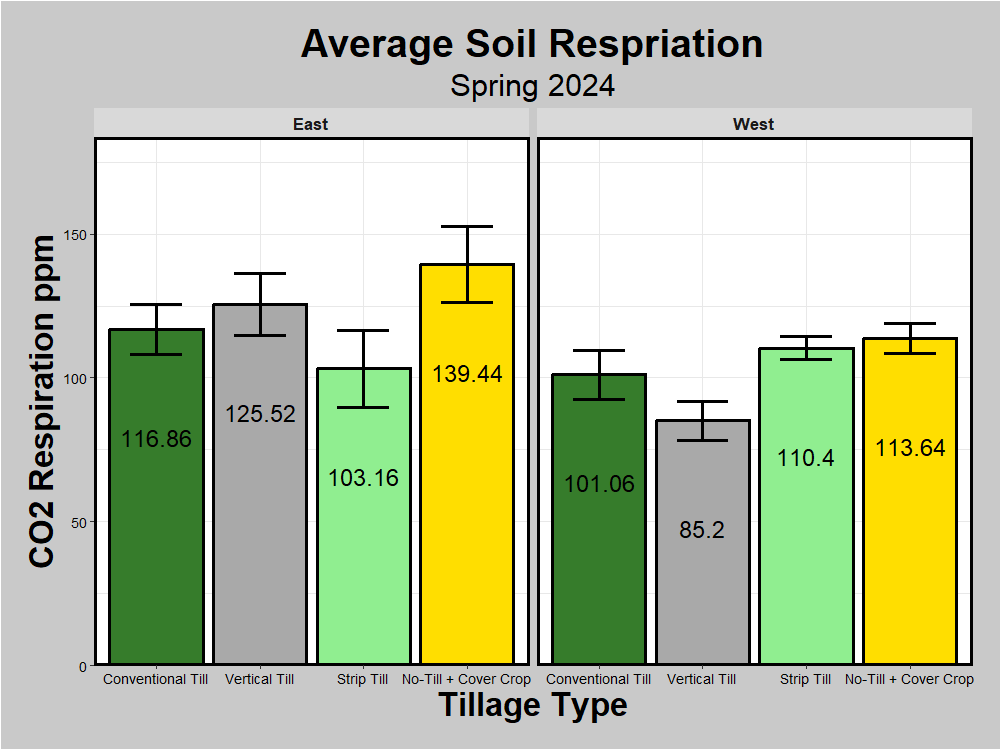
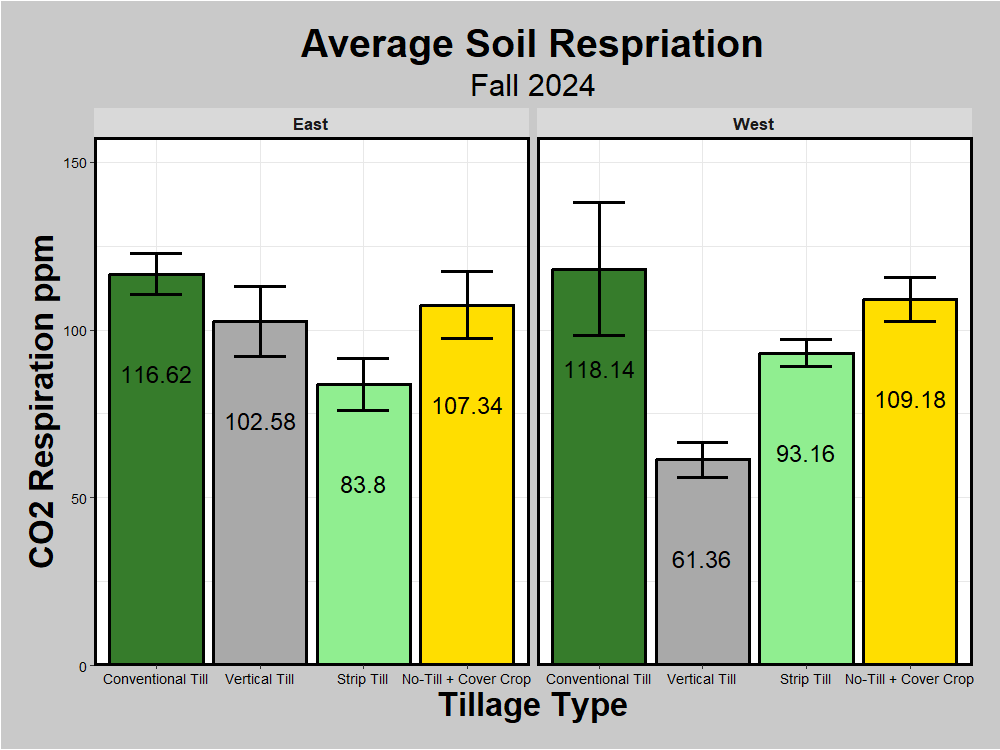
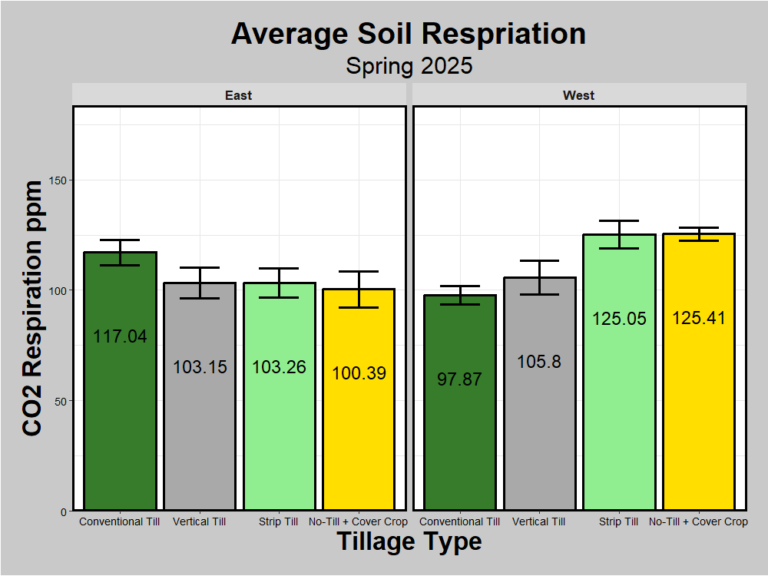
Average soil carbon mineralization values measured using the 24-hour CO₂ burst test throughout the study showed that the no-till + cover crop treatment had higher carbon dioxide (CO₂) levels than the other treatments, indicating greater microbial activity in the soil. This is expected, as the addition of cover crops and cash crop residue provides more organic matter for the microbial community to decompose.

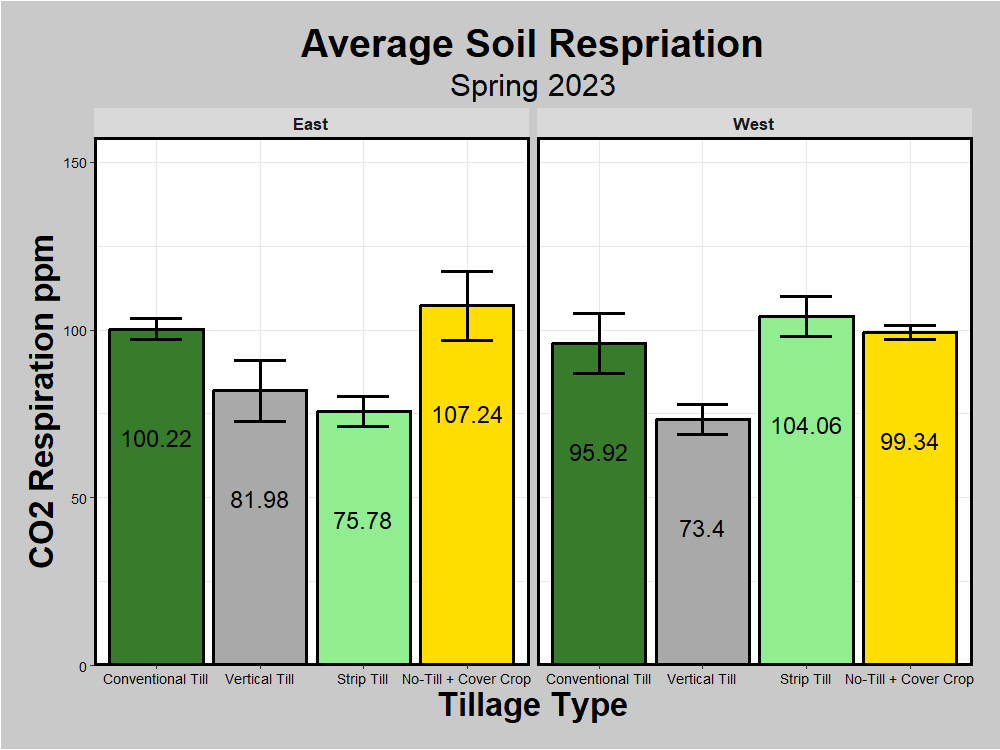 Spring CO2 respiration for 2023.

Aggregate Stability
Aggregate stability is a physical soil health indicator that measures the ability of soil aggregates (small clusters of soil) to resist breaking apart when exposed to water. Stable soil aggregates are important for maintaining soil structure, promoting water infiltration, reducing erosion and supporting root growth. In this study, wet aggregate stability was measured by evaluating the proportion of soil aggregates that remained intact after standardized wet sieving. The percentage of stable aggregates provides an indication of the soil’s structural integrity and its resistance to physical degradation. Higher wet aggregate stability values generally reflect improved soil structure, greater organic matter accumulation, enhanced biological activity and increased resilience to erosion and compaction.
Demonstration video of aggregate stability
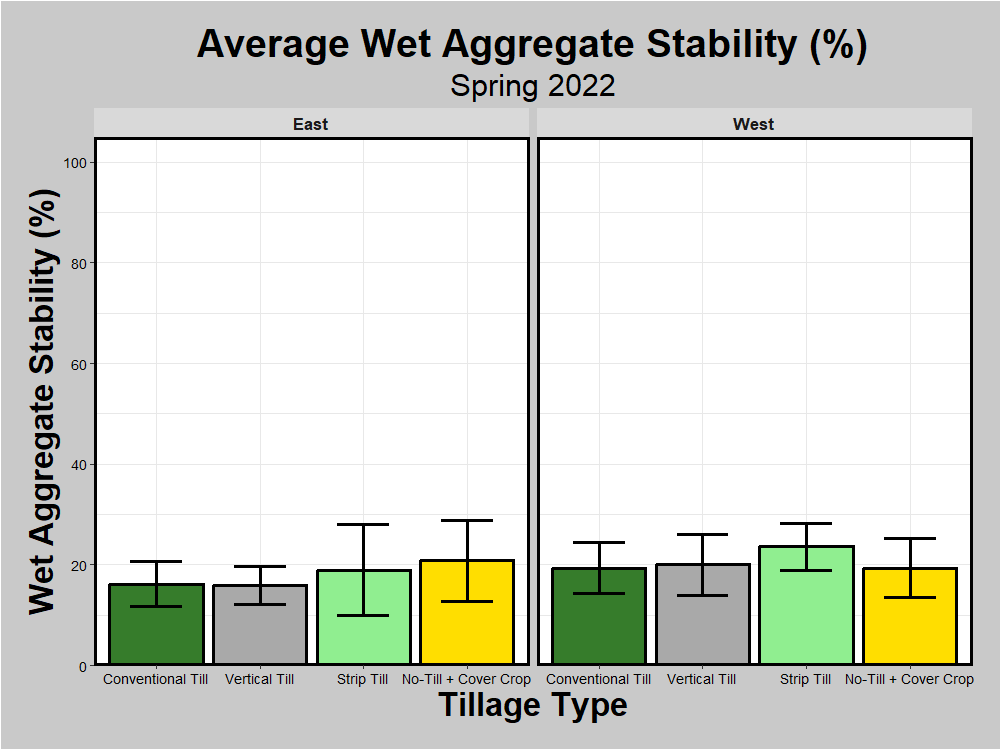
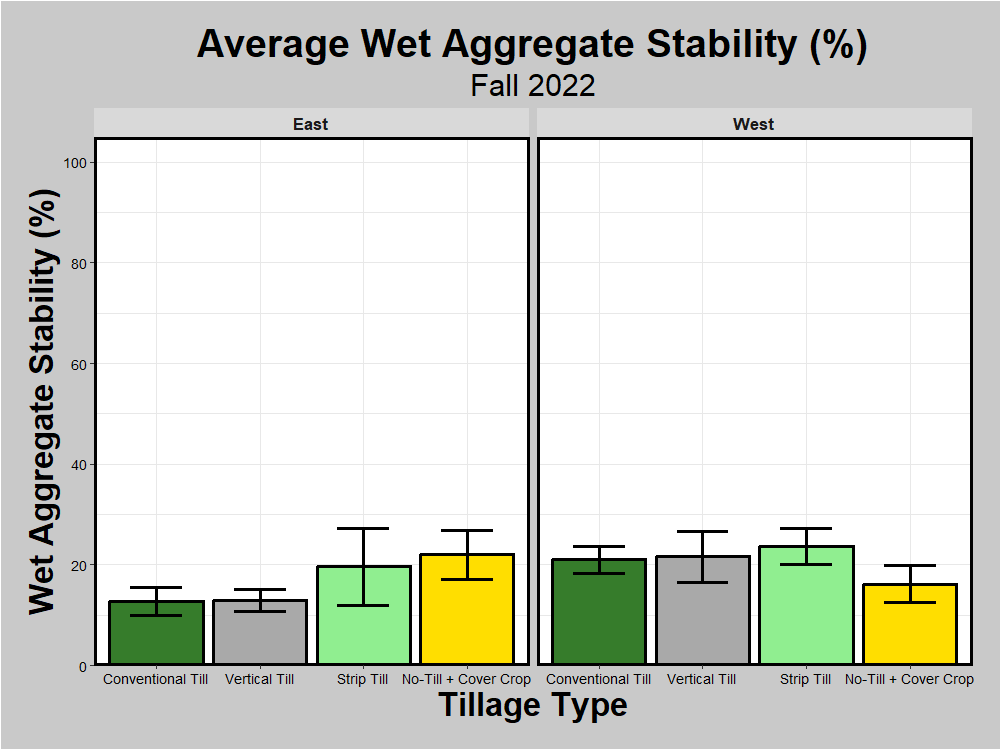
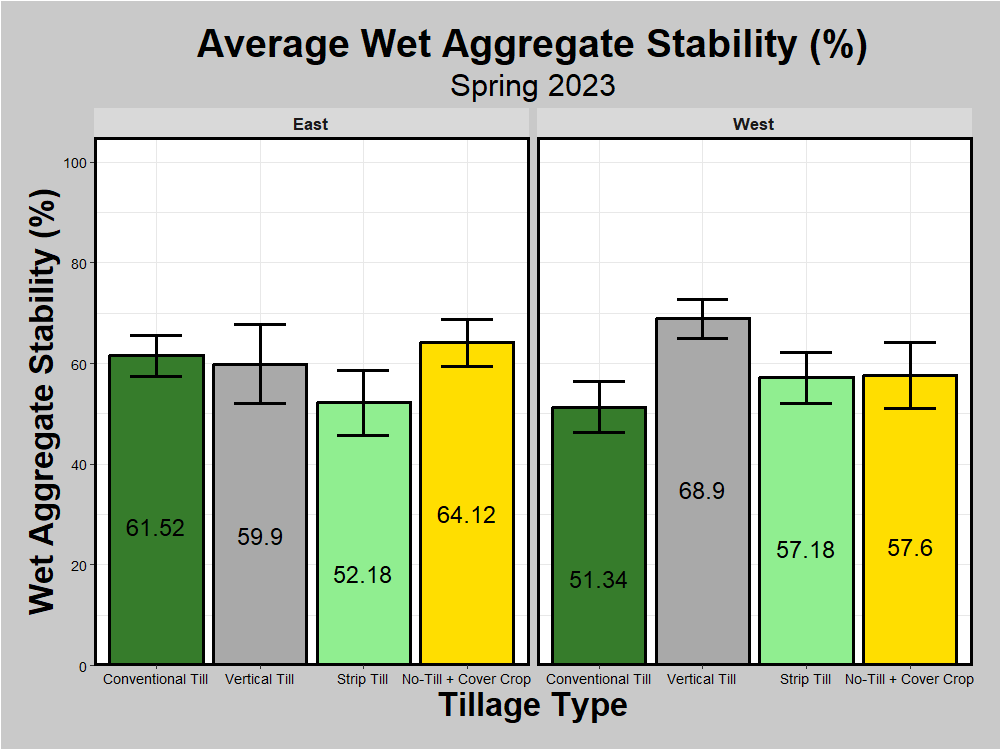
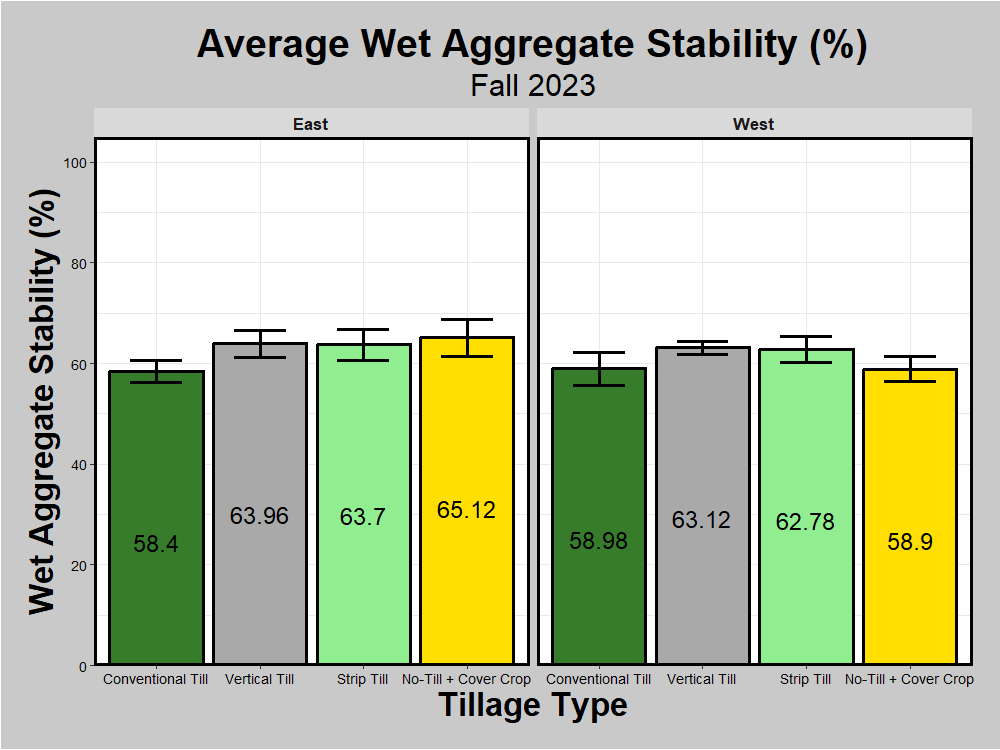
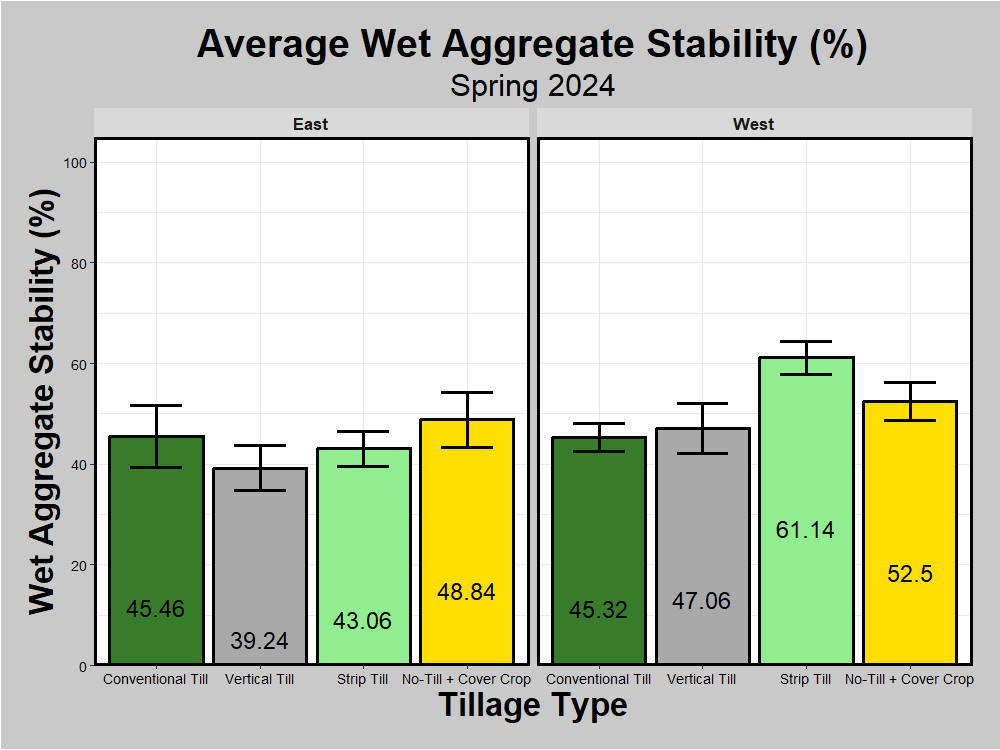
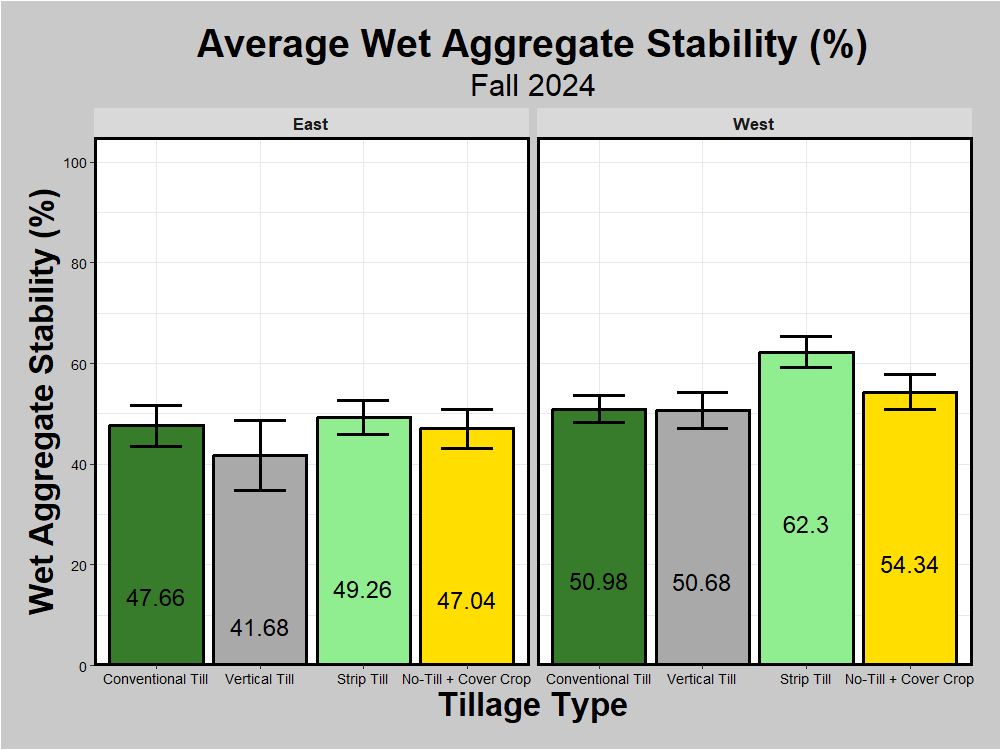
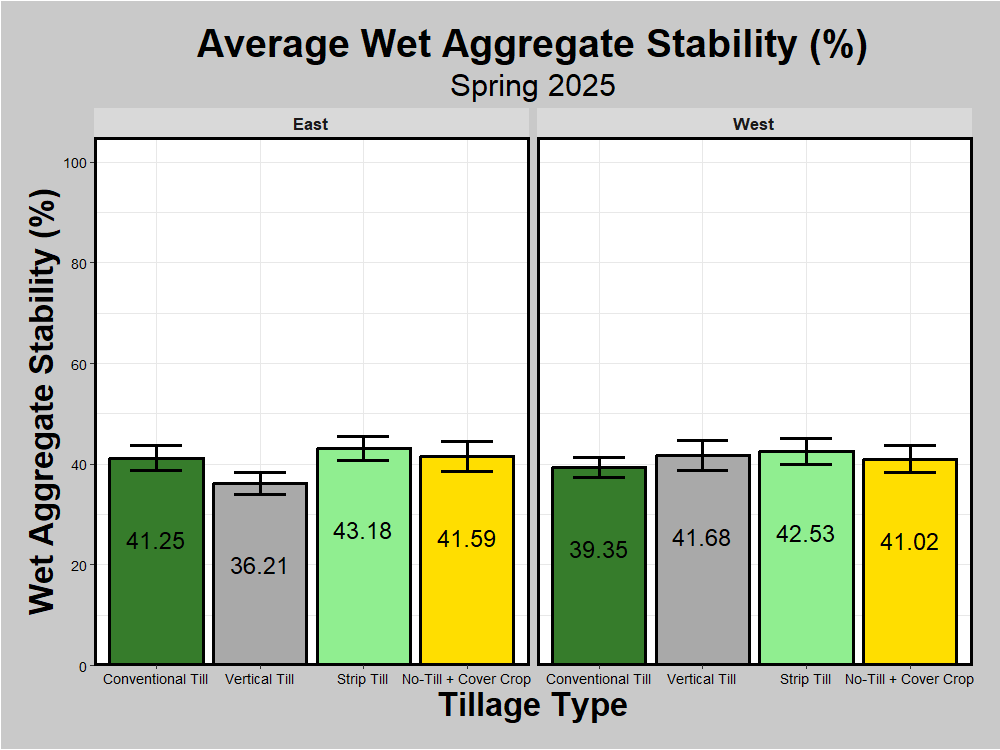
The figure displays the average aggregate stability values during the duration of the study. While the results are all fairly similar, we can observe an increase in aggregate stability in the strip till and no-till + cover crop treatments. This aligns with what we might expect given the lack of full-width tillage within these treatments. Tillage disrupts the structural integrity of the soil, which would lead to the destruction of soil aggregates. As the study continues, this is an interesting metric to observe, as these values will likely continue to diverge over time.

Soil Organic Carbon
Soil organic carbon (SOC) is a chemical soil health indicator that measures the amount of carbon stored in soil organic matter. Soil organic carbon plays a critical role in maintaining soil fertility by improving nutrient availability, increasing water-holding capacity, enhancing soil structure and supporting microbial activity. In this study, soil organic carbon was measured to quantify the amount of organic carbon present within the soil. The concentration of organic carbon provides an indication of the soil’s capacity to store carbon, sustain biological processes and support long-term agricultural productivity. Higher soil organic carbon levels generally reflect improved soil health, greater resilience to environmental stress, and increased potential for nutrient cycling and carbon sequestration.
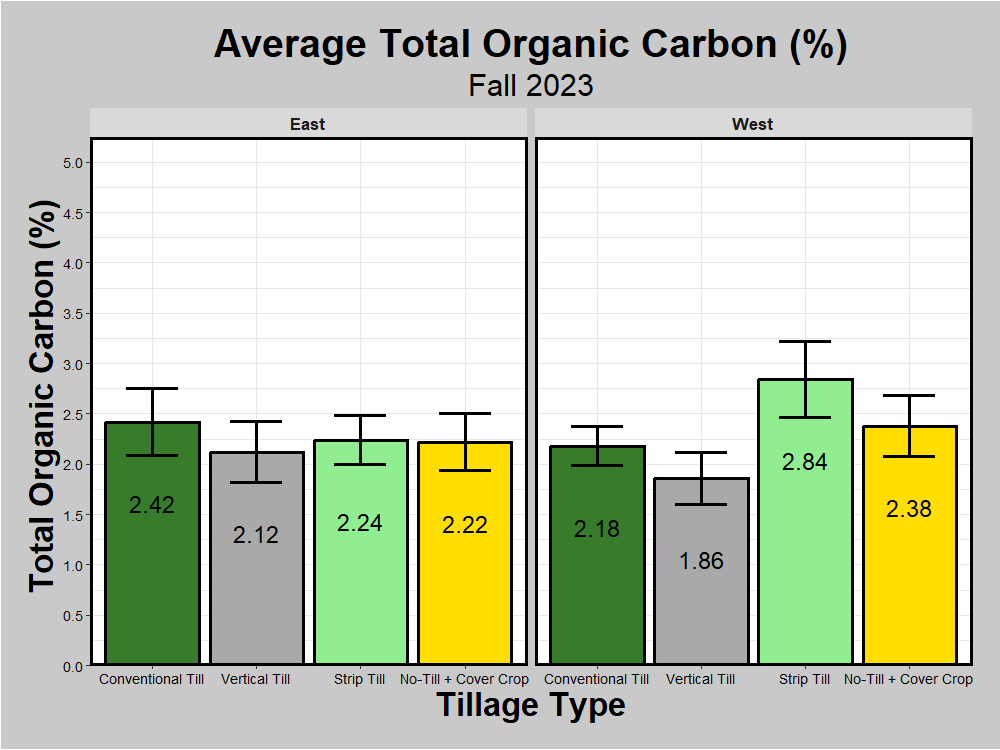
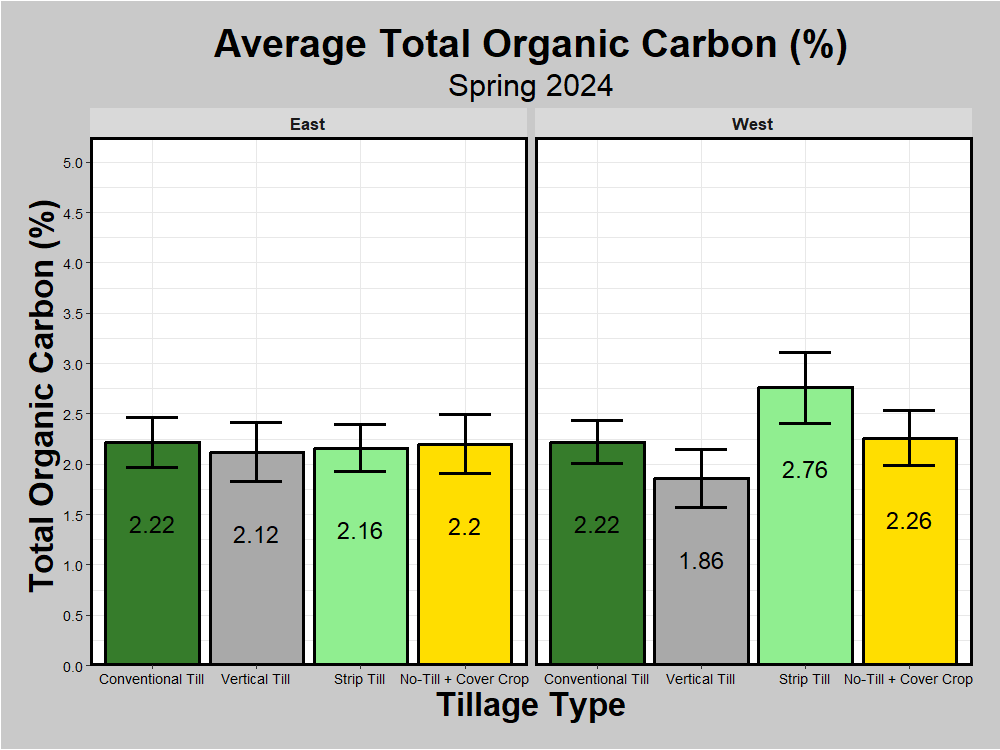
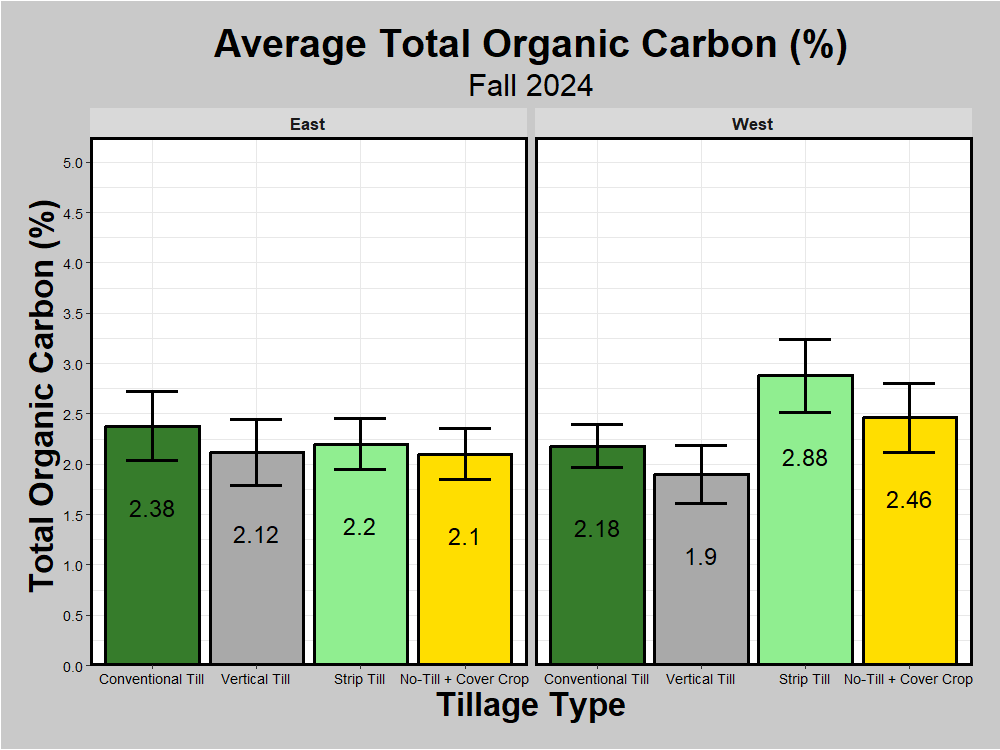
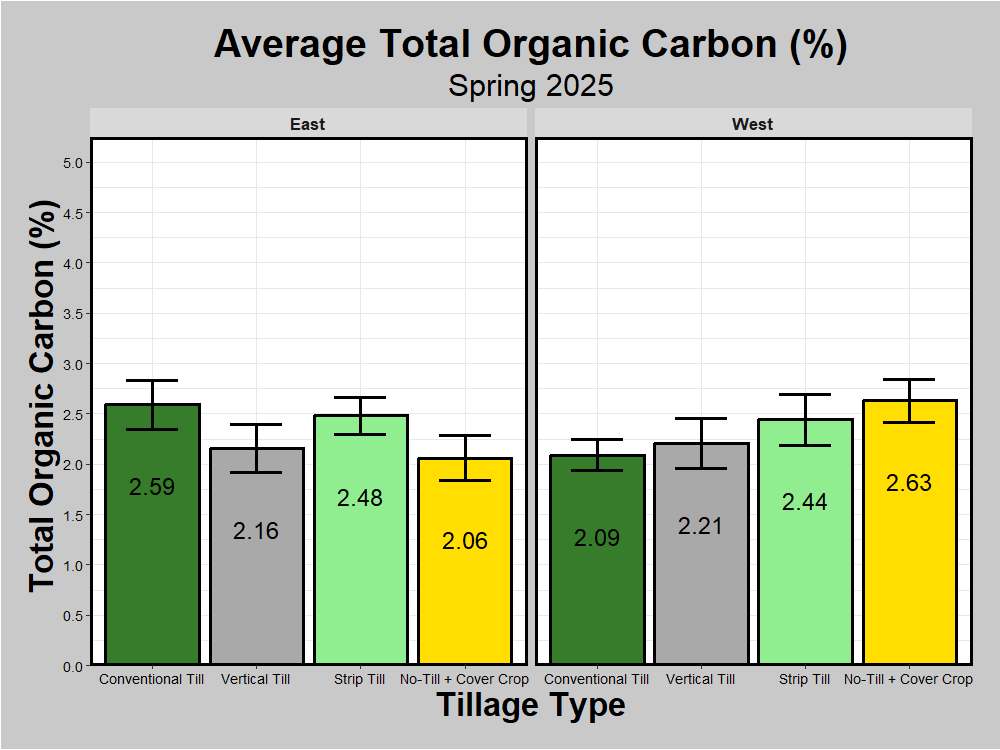
The figure displays the average total soil organic carbon measured throughout the duration of this study. While these values are similar in value, we can still observe differences across treatments. The strip till contains the highest organic carbon compared to the other three treatments. One reason for these somewhat unexpected results could be the baseline soil organic matter might be higher in the strip tillage treatment compared to the others. This could be due to previous cropping practices or variations in soil type. This metric would be interesting to monitor in future years of this study to determine how it continues to change over time.
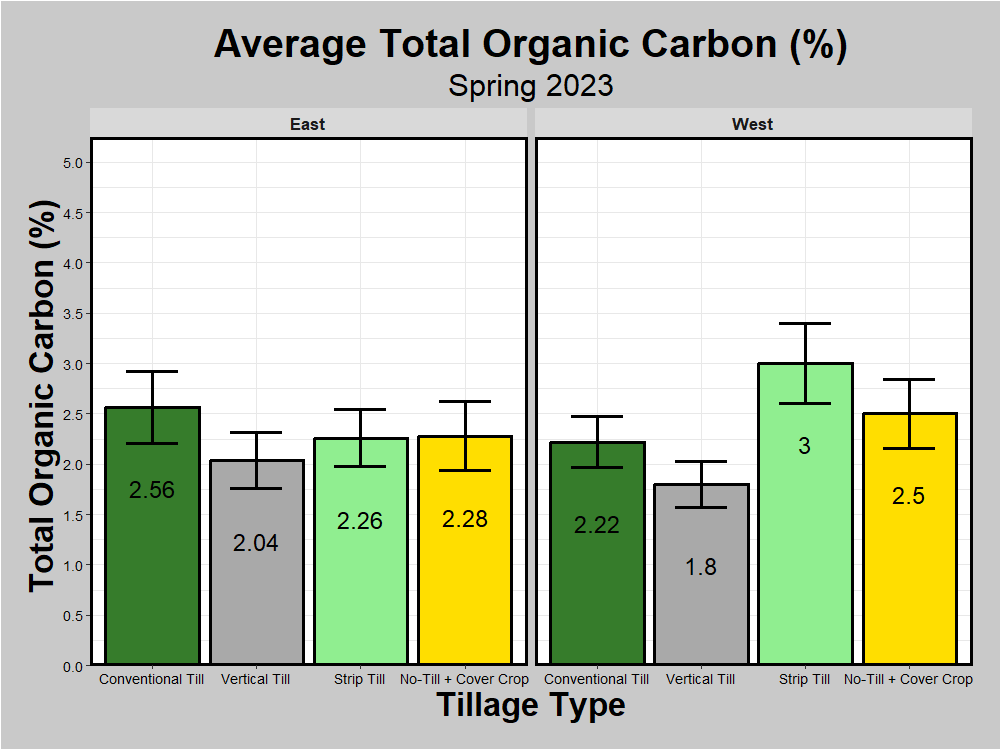 Spring organic carbon for 2023.
The health of soil relates to its ability to perform ecosystem functions and is an integration of its physical, chemical and biological components. While hard to define and harder to measure, three soil health metrics are measured twice a year for the duration of this project to capture any trends or changes over time between tillage treatments.
- Carbon mineralization potential via 24-hour CO₂ burst test
- Aggregate stability
- Organic carbon (added in 2023)
These three metrics are recommended by the Soil Health Institute based on their analysis of many soil health measurements.
These three soil health metrics have been measured at the Digital Fields Farm to evaluate changes in soil health in relation to management systems.
Carbon Mineralization Potential
Carbon mineralization potential is a biological soil health indicator that measures the amount of carbon dioxide (CO₂) released by soil microorganisms as they decompose organic matter (soil respiration). This process reflects microbial activity and the availability of organic carbon that can be converted into plant-available nutrients. In this study, carbon mineralization was assessed using the 24-hour CO₂ burst test, which measures microbial respiration during a standardized incubation period. The amount of CO₂ released provides an indication of the activity of the soil microbial community and its capacity to decompose readily available organic matter. Higher carbon mineralization values generally indicate a more biologically active soil with greater potential for nutrient cycling, improved soil fertility, and long-term soil productivity.
The figure contains average soil carbon mineralization values measured through the 24-hour CO₂ burst test throughout the duration of this study. These results indicate that the no-till + cover crop treatment has higher amounts of carbon dioxide (CO₂) than the other treatments, which indicates strong microbial activity occurring in the soil. We would expect higher microbial activity in the no-till + cover crop treatment because of the increased residue through the addition of cover crops as well as cash crop residue that provides more ‘food’ for the microbial community to decompose.
Aggregate Stability
Aggregate stability is a physical soil health indicator that measures the ability of soil aggregates (small clusters of soil) to resist breaking apart when exposed to water. Stable soil aggregates are important for maintaining soil structure, promoting water infiltration, reducing erosion and supporting root growth. In this study, wet aggregate stability was measured by evaluating the proportion of soil aggregates that remained intact after standardized wet sieving. The percentage of stable aggregates provides an indication of the soil’s structural integrity and its resistance to physical degradation. Higher wet aggregate stability values generally reflect improved soil structure, greater organic matter accumulation, enhanced biological activity and increased resilience to erosion and compaction.
Demonstration video of aggregate stability
The figure displays the average aggregate stability values during the duration of the study. While the results are all fairly similar, we can observe an increase in aggregate stability in the strip till and no-till + cover crop treatments. This aligns with what we might expect given the lack of full-width tillage within these treatments. Tillage disrupts the structural integrity of the soil, which would lead to the destruction of soil aggregates. As the study continues, this is an interesting metric to observe, as these values will likely continue to diverge over time.
Soil Organic Carbon

Soil organic carbon (SOC) is a chemical soil health indicator that measures the amount of carbon stored in soil organic matter. Soil organic carbon plays a critical role in maintaining soil fertility by improving nutrient availability, increasing water-holding capacity, enhancing soil structure and supporting microbial activity. In this study, soil organic carbon was measured to quantify the amount of organic carbon present within the soil. The concentration of organic carbon provides an indication of the soil’s capacity to store carbon, sustain biological processes and support long-term agricultural productivity. Higher soil organic carbon levels generally reflect improved soil health, greater resilience to environmental stress, and increased potential for nutrient cycling and carbon sequestration.
The figure displays the average total soil organic carbon measured throughout the duration of this study. While these values are similar in value, we can still observe differences across treatments. The strip till contains the highest organic carbon compared to the other three treatments. One reason for these somewhat unexpected results could be the baseline soil organic matter might be higher in the strip tillage treatment compared to the others. This could be due to previous cropping practices or variations in soil type. This metric would be interesting to monitor in future years of this study to determine how it continues to change over time.