Cover Crops

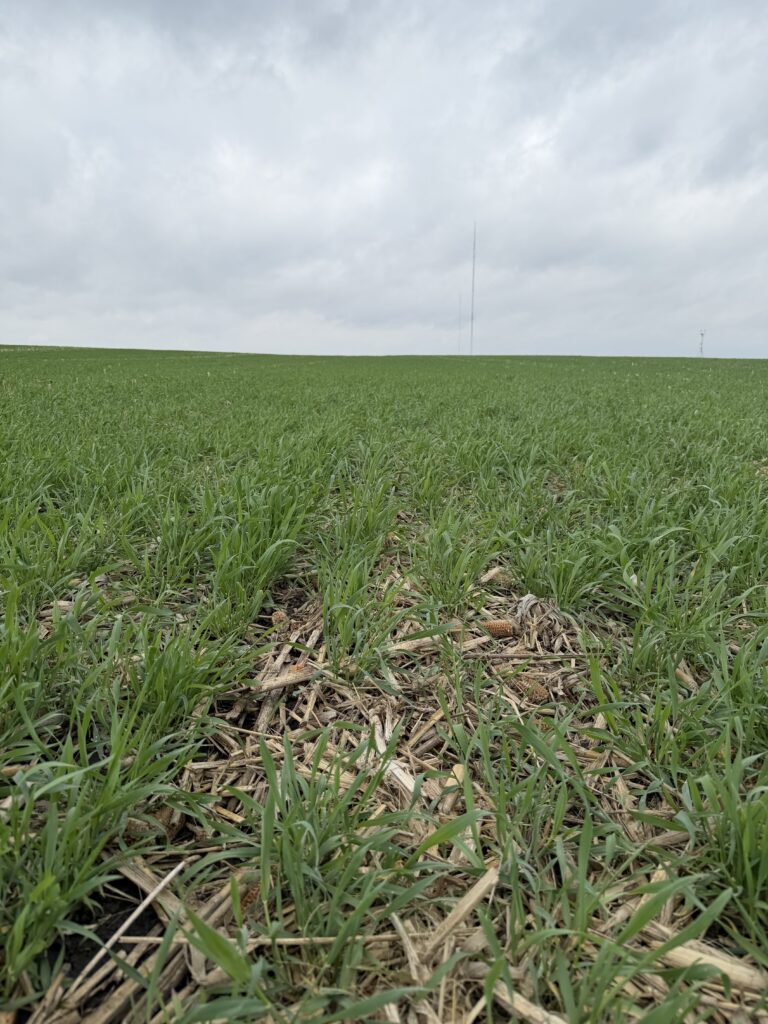
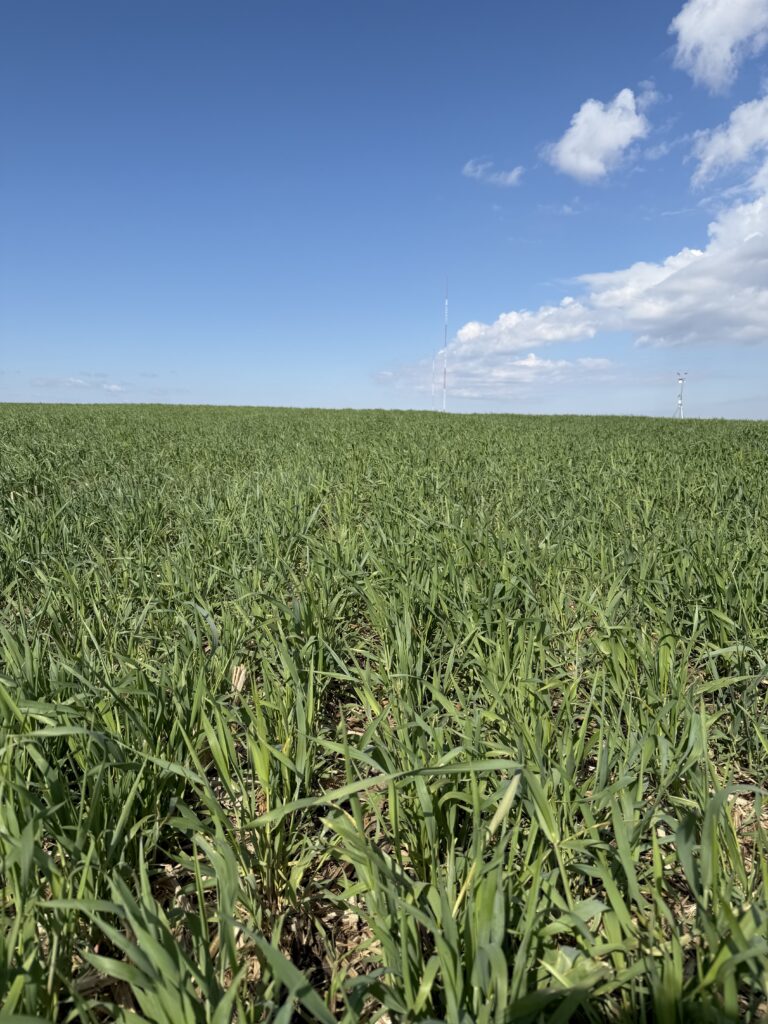
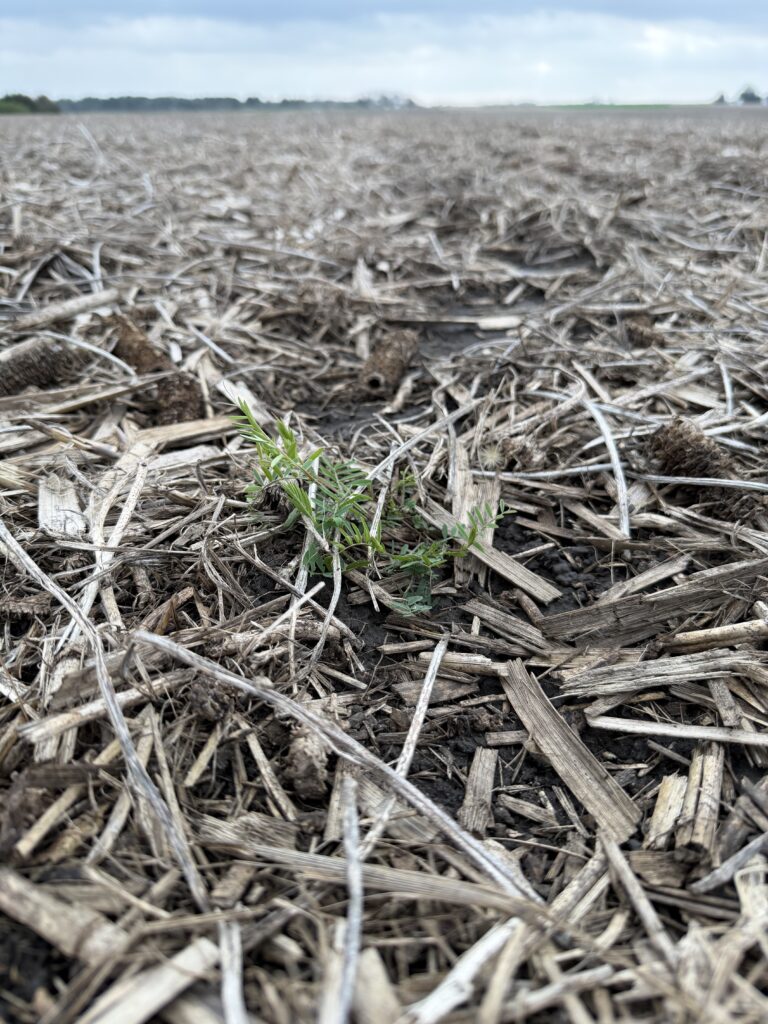
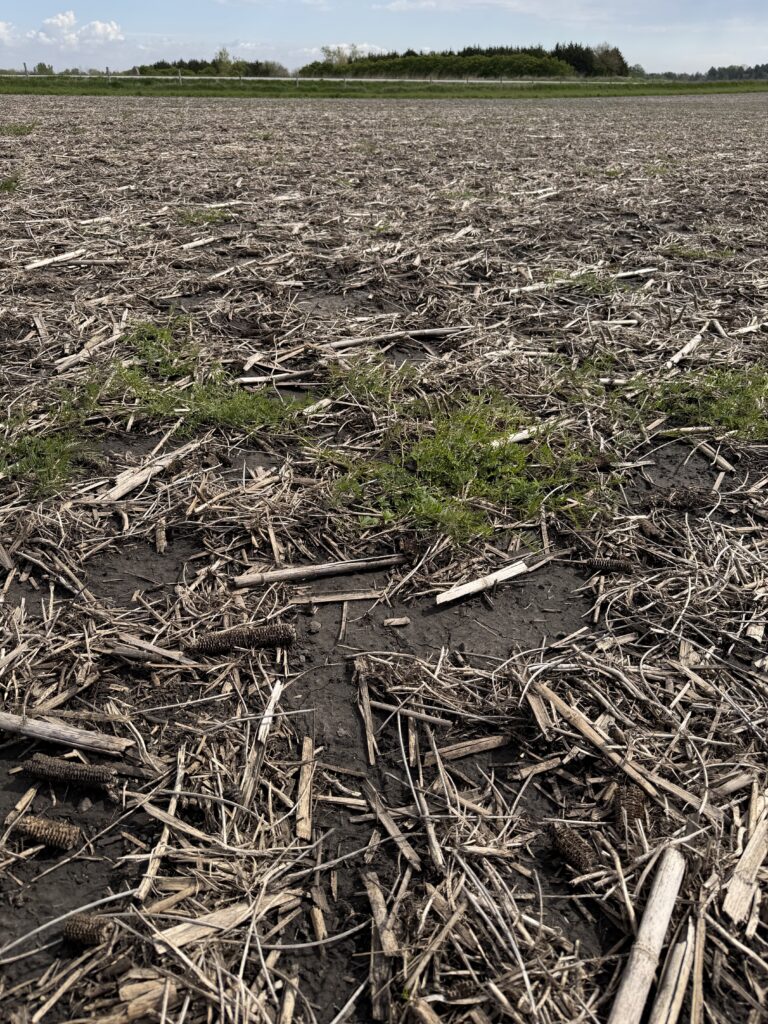
Cover crops are utilized every growing season at the Digital Fields Farm as part of the no-till treatments. Typically, Hazlet Cereal Rye is seeded ahead of soybeans, and a cover crop mix is seeded ahead of corn. Each year, cover crops are sampled on a 0.5 meter grid across 10 points in each field. The crop is cut off at the base of the soil, dried in a lab oven, and then weighed to determine the amount of dry biomass per acre produced by the cover crop. This information is useful in determining how seeding timing of the cover crop effects establishment and ultimate biomass production by the cover crop.

Cover Crop Biomass
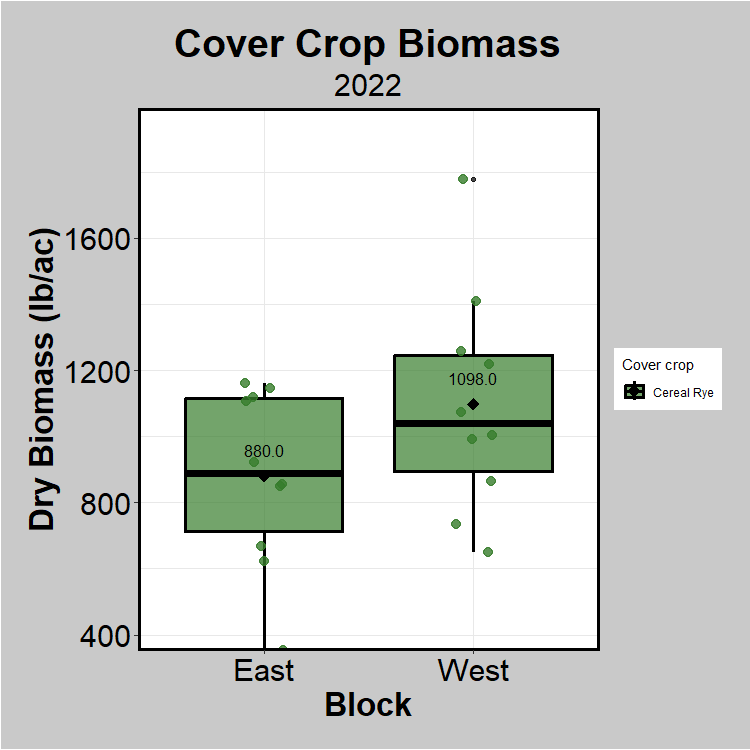
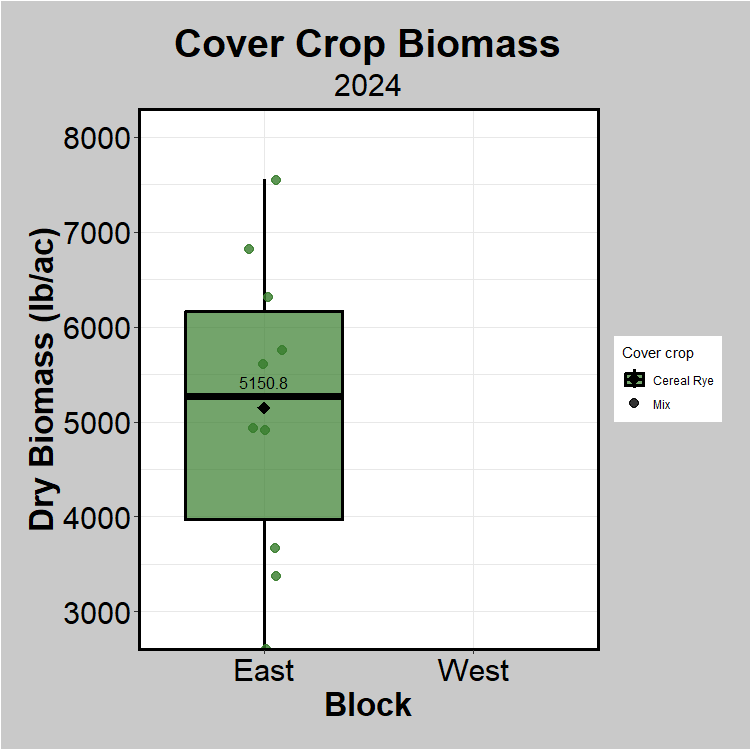
Average cover crop biomass varied between cereal rye and the cover crop mixes used in the study. Cereal rye generally established well across years despite some variation in seeding rates and timing. In contrast, the cover crop mixes had more difficulty establishing, even with adjustments to species selection and seeding timing each year.


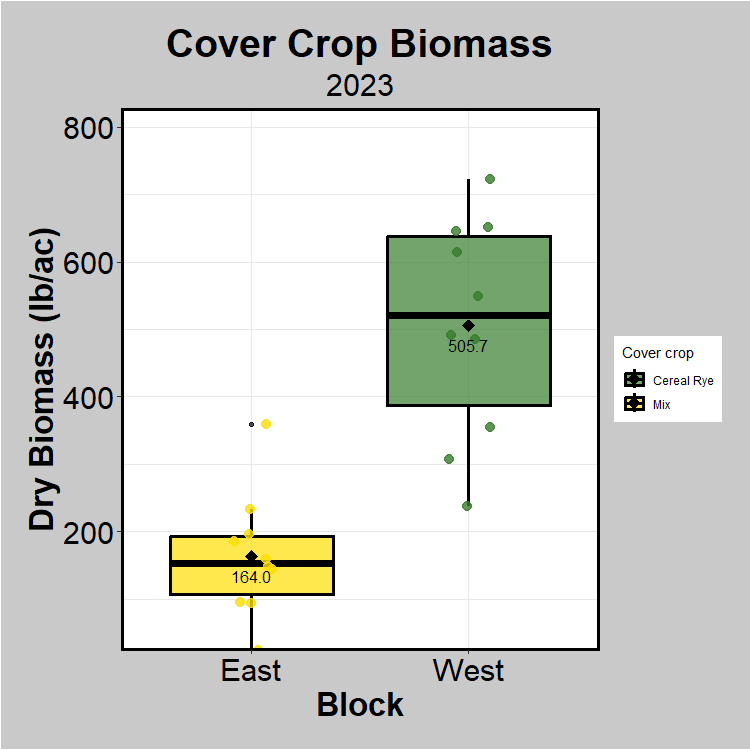
 Ahead of soybeans, Hazlet rye was drilled on 10/19/2022 at a seeding rate of 40 lb/ac and terminated on 5/28/2023. The spring establishment was not as strong as the previous year, as it averaged 506 lb of dry biomass per acre.


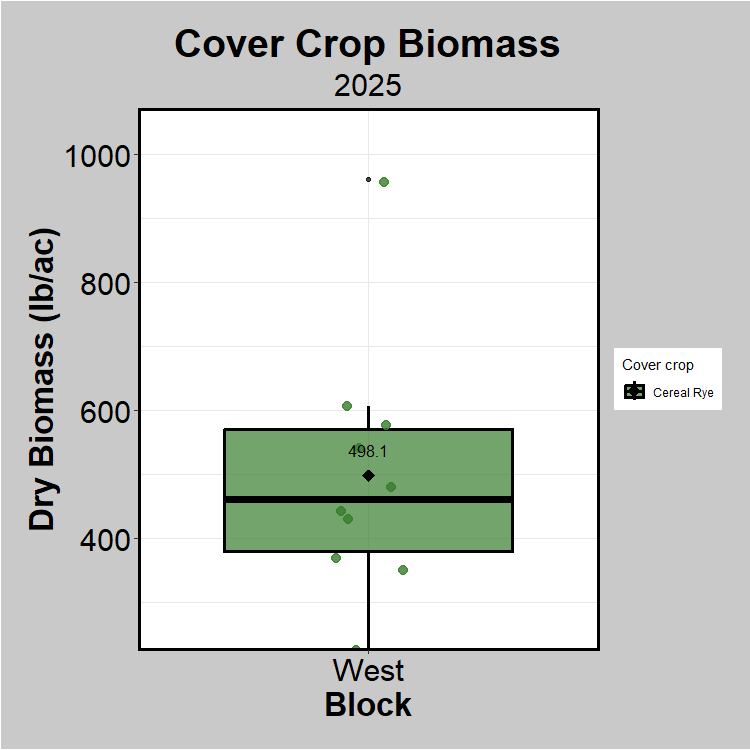
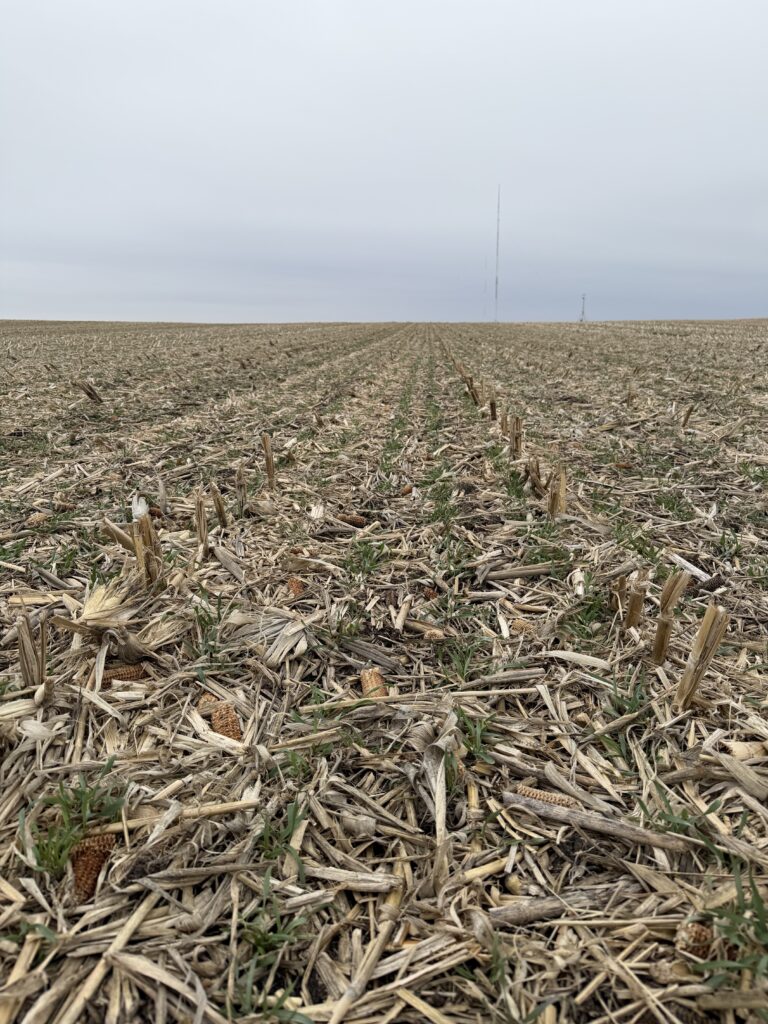 Ahead of soybeans, Hazlet rye was drilled on 10/13/2025 at a seeding rate of 45 lb/ac and terminated on 5/13/2026.