
Preparing the Next Generation of Precision Agriculture Leaders
As precision agriculture continues to shape modern farming, preparing the next generation of agricultural professionals starts long before they enter the workforce.
Through the Digital Ag Innovation Lab at Iowa State University, PATCH (precision ag technology curriculum for high schoolers), Iowa high school students are gaining hands-on experience with precision agriculture technologies while teachers receive the resources and confidence needed to bring these topics into their classrooms.
Identifying a Need
The PATCH program was launched in 2025 through funding from the CHS Foundation with a goal of building a sustainable precision agriculture education program for Iowa high schools. Rather than providing schools with a one-time demonstration, the Digital Ag team developed a long-term solution that equips educators with curriculum, technology and training they can use year after year.
For Kate Groe, test engineer at Digital Ag, the program became one of her first major projects after joining the team.
"I started in January 2025, and that’s around the same time this project was starting,” Groe said. “So, the PATCH program was really the first project that I got to work on as a full-time employee.”
Before developing the curriculum, Groe spent time speaking directly with agricultural educators across Iowa to better understand what they needed.
“I asked the teachers two questions: one, what do you currently do to teach precision ag in your classroom? And two, what’s stopping you from doing more of it?" Groe said.
The responses were consistent. Many teachers had little experience teaching precision agriculture because they had not received training themselves, and schools often lacked the funding to purchase the necessary equipment.
Building a Solution
To address those challenges, Digital Ag created a comprehensive online curriculum complete with lesson plans, presentations, worksheets, quizzes, answer keys and classroom activities.
The curriculum was intentionally designed to begin with foundational agricultural concepts before introducing advanced precision agriculture technologies, allowing educators from any background to confidently teach the material.
Alongside the curriculum, every participating school received a precision agriculture education cart valued at approximately $12,000, which includes an Ag Leader GPS 7000 receiver, an Ag Leader InCommand 1200 display, wiring harnesses and a one-year TerraStar-C Pro subscription, allowing students to practice real-world precision agriculture skills without needing access to farm equipment.
The final piece of the program is a two-day “Train-the-Trainer" workshop, where educators experience the curriculum from a student perspective before bringing it back to their classrooms.
“We spent two days treating the teachers like students,” Groe said.
Early Success
Since its launch, the program has received overwhelming interest. During its first year, 39 educators applied to participate, with 22 schools selected based on available resources. The strong response reinforced the need for precision agriculture education throughout Iowa.
Exit surveys showed that while most teachers entered with limited knowledge of precision agriculture, every participant completed the training feeling somewhat too confident in their ability to teach these topics.
“You guys did an outstanding job presenting and building this curriculum. The best precision curriculum I've had access to,” one teacher wrote.
Bringing Learning to Life
Following the training, the Digital Ag Team visited participating schools to observe the curriculum in action and gather additional feedback. Teachers reported increased student engagement and meaningful changes within their agriculture programs.
“I noticed a difference; my students do and their partners do. Thank you to you and your team for making this happen,” one teacher wrote.
With more than 300 students impacted during the program’s first year alone, PATCH is helping bridge the gap between agriculture, STEM and computer science while giving students practical exposure to technologies they are likely to encounter in future careers.
Strength Through Partnership
The program’s success has been made possible through strong partnerships with organizations including the CHS Foundation, Ag Leader, the Iowa FFA Association and Iowa State University's Department of Agricultural Education and Students. These collaborations helped ensure educators received high-quality curriculum, industry-relevant equipment and professional development opportunities, including graduate credit and teaching license renewal credit.
According to Groe, these partnerships have created benefits that extend beyond the classroom by connecting students with technologies they are likely to use throughout their careers.
Growing the Program
Building on the success of its inaugural year, the PATCH program continues to expand. This summer, 24 additional agricultural educators from across Iowa participated in the two-day “Train-the-Trainer" workshop, bringing the total number of teachers participating in the program to more than 45.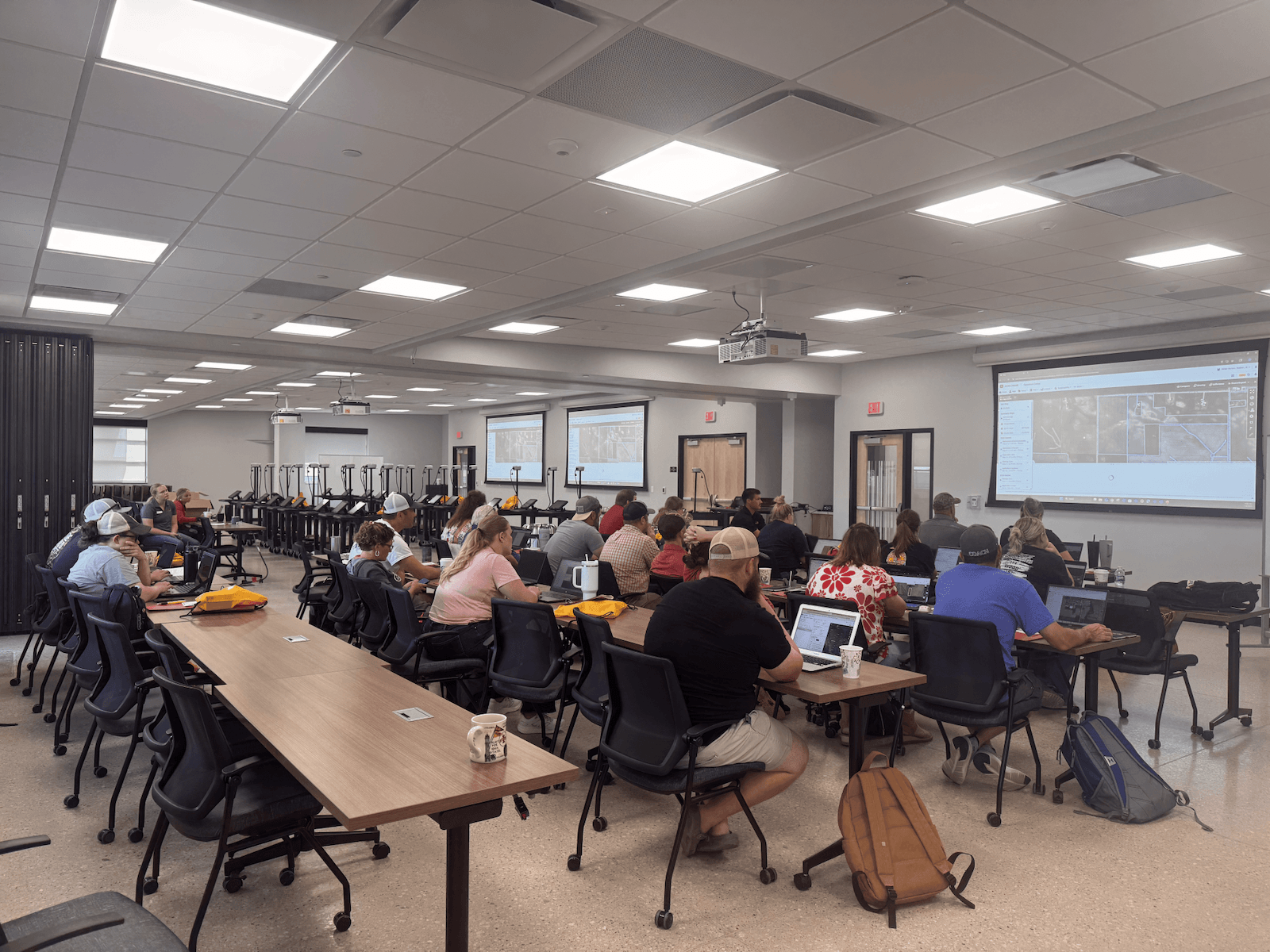
The training also provides educators with an opportunity to learn from one another while gaining hands-on experience with technologies that continue to shape modern agriculture.
“I work with teachers around the state to support them in curriculum development and training, and I really wanted to see what Digital Ag does, and I had heard so many good things,” Kevin Anderson, Iowa FFA Teacher Support Specialist, said.
For many educators, the training provides an opportunity to build confidence in teaching technologies that were not part of their own agricultural education.
“I will be going into my 38th year of teaching, and I am not as familiar with this precision technology. So, this is a great way for me to get some background and equipment and take it back to the classroom and share with the kids,” Eric Kumm, South O’Brien High School Teacher, said.
Looking Ahead
Beyond supporting teachers, PATCH is introducing students to the wide range of careers available in agriculture.
"It's important for students to get exposure to it at an earlier age,” Groe said. “And not only that, but also showing kids that, even if they don't have a family farm to inherit when they graduate, they can still go into agriculture."
As precision agriculture becomes standard across the industry, the Digital Ag Innovation Lab continues expanding the PATCH program while updating its curriculum and supporting new cohorts of educators each year.
By combining hands-on technology, teacher training and industry partnerships, the program is helping prepare hundreds of students across Iowa for the future of agriculture.
Contact
Alison Doyle, ISU Digital Ag Innovation Lab, (515)-509-3361, adoyle@iastate.edu