
The Future of Digital Agriculture
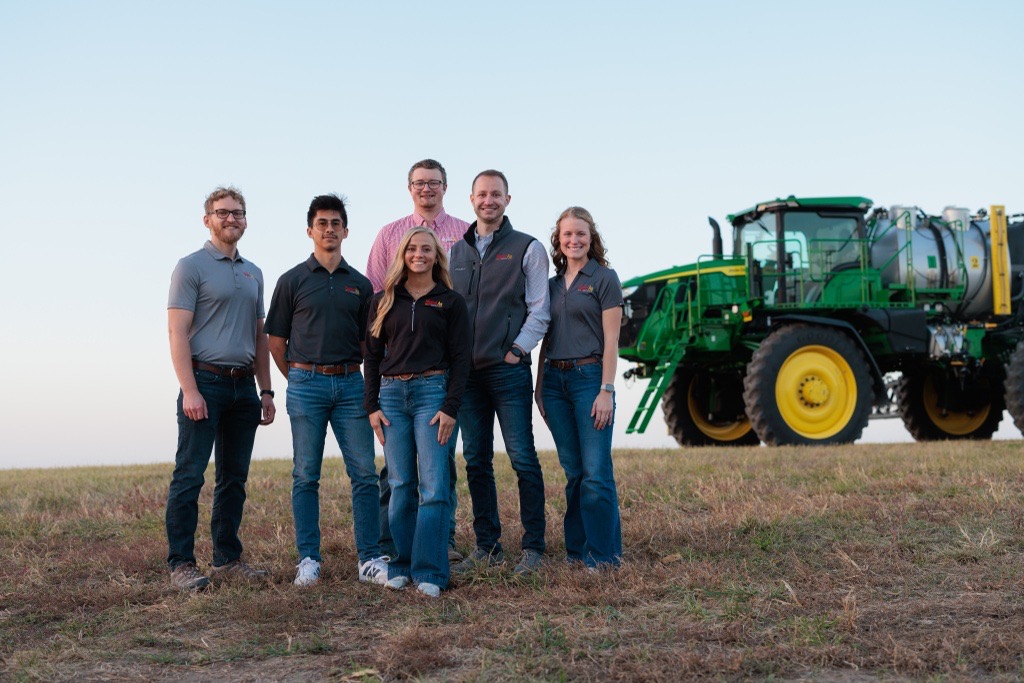
The Digital Ag Innovation Lab at Iowa State University prepares graduate students at the intersection of agricultural technology, engineering, computer science and applied data systems. Through its graduate pipeline, students work on industry-sponsored research where projects are tested, refined and developed in real agricultural environments rather than remaining in the classroom.
Assistant Professor Bailey Adams, a faculty member in the Digital Ag Innovation Lab, said the program is designed to provide more than technical knowledge.
“The primary value lies not in the specific project assignment, but in the immersive, hands-on program experience that emphasizes systems-level thinking, advanced analytical skills and both the exploration and delivery of real-world solutions on industry timelines.”
Graduate students collaborate with faculty, engineers and industry partners while contributing to projects used by equipment manufacturers and agribusiness companies. Along the way, they build technical expertise while strengthening communication, teamwork and problem-solving skills.
A Bridge Between Learning and Industry
For many students, the graduate pipeline offers a unique balance between learning and professional responsibility. Joel Huerta-Musil joined the program in spring 2022 as a graduate student before transitioning into a full-time role after graduating in fall 2023. 
“I was working on industry projects, but I still had that learning space where it’s okay not to have all the answers right away,” Huerta-Musil said. “You’re encouraged to experiment and figure things out. It felt like an advanced internship in the sense that I was learning constantly, but I also had real responsibility and meaningful work.”
Students are trusted with real projects early while receiving mentorship from faculty and staff throughout their graduate experience. Adams serves as one of the program's faculty advisors alongside Dr. Matt Darr, while full-time technical staff help mentor students through research projects.
That combination of hands-on learning and industry collaboration helps students transition smoothly into professional careers. Grace Kueker, a former graduate student who now works as a systems engineer at John Deere, said the experience closely reflected what she would encounter after graduation.
"The Digital Ag Innovation Lab provided an environment that closely mirrored industry. Students are treated as engineers and researchers whose ideas and technical contributions carry meaningful weight, regardless of their academic status. Working alongside full-time engineers and industry partners allowed me to develop confidence, take ownership of projects and gain real-world experience before entering the workforce,” Kueker said.
Former graduate student Teddy Bockhop also credits the program with preparing him for an industry career.
“Overall, I wanted to go into the industry and kind of learn more, explore more,” Bockhop said.
Today, Bockhop works at Caterpillar, applying many of the engineering and problem-solving skills he developed through the graduate pipeline.
From Field Work to System Design
As students gain experience, their responsibilities evolve from collecting data to designing and improving agricultural systems.

“I started by driving machines and collecting data just to understand what we were testing and how we could improve it,” Huerta-Musil said. “As I gained more experience, I eventually helped develop the control systems we were working on.”
Students also communicate directly with industry sponsors, giving them experience presenting technical work and collaborating with professionals outside the university.
“From my first week, I was already working with industry sponsors who treated me as part of the team,” Huerta-Musil said. “I had real responsibilities right away and learned how to communicate technical work in a way that was clear and useful to both engineers and non-technical partners.”
Beyond research, graduate students participate in seminars, professional conferences and development opportunities through Iowa State University, helping them strengthen leadership and communication skills alongside their technical training.
Learning Through Real-World Problem Solving
Research rarely follows a predictable path. Students regularly encounter challenges during field testing and system development that require them to troubleshoot, adapt and collaborate.
“Some of the most valuable learning moments came when things didn’t work the way we expected,” Huerta-Musil said. “When you got stuck, you’d reach out to others who would help you think through the problem. Those moments taught me how to approach problems differently and work through uncertainty.”
Kueker said those experiences helped shape the way she approaches engineering today.
"Collaborating with industry partners highlighted the importance of system-level thinking. It can be easy to focus on a specific issue, but industry experience has shown me the value of evaluating whether a solution is addressing the root cause or simply treating a symptom,” Kueker said.
Advancing Engineering Through Research 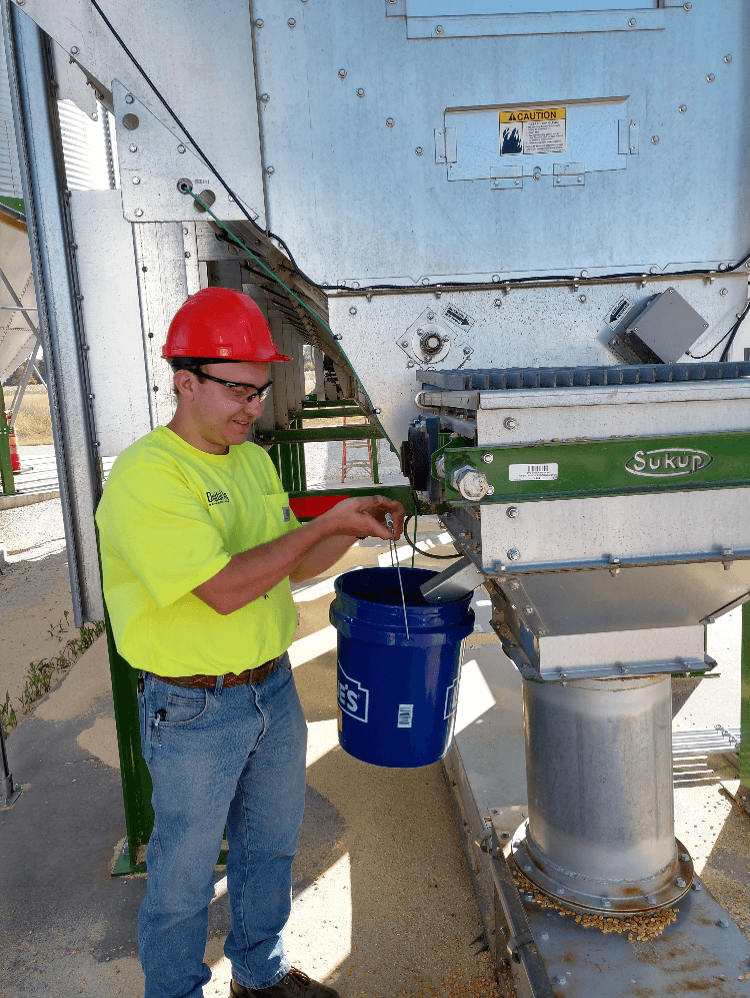
Graduate students contribute to a wide range of industry-sponsored projects, including vehicle dynamics, advanced control systems, radar sensing, computer vision, targeted spray applications, in-field agronomic testing and grain drying simulation.
Keith Urmie, whose research focuses on grain drying systems, said the experience has strengthened both his engineering and research abilities.
“Graduate school here is about becoming a better engineer and a better researcher at the same time,” Urmie said. “My work has pushed me to think more critically about how I test systems, how I analyze data and how I design solutions that actually improve real-world agricultural processes.”
His work reflects the program's emphasis on connecting academic research with practical solutions that improve agricultural performance.
Building What Comes Next
Across the graduate pipeline, students are challenged to take ownership of their learning while developing the technical and professional skills needed for careers in industry or academia.
Adams said the program's ultimate goal is to prepare graduates for long-term success.
“A versatile toolbox of technical and soft skills that prepare participants for success in the next stage of their professional journey, whether in industry or academia,” Adams said. 
Huerta-Musil believes students get the most out of the experience when they actively pursue opportunities.
“You really get out of the program what you put into it,” Huerta-Musil said. “The opportunities are there, but you have to be willing to step into them and push yourself.”
For students considering graduate school, Adams believes that Digital Ag offers a distinctive opportunity to combine advanced education with meaningful industry experience.
“If you are someone who is interested in graduate school, who has is passionate for tackling and engaging with complex R&D questions in the world of ag technology and digital and precision ag, and who wants a high quality, well rounded advanced graduate level applied experience while collaborating with a dedicated project team of full-time staff and other students, then this is for you,” Adams said.
Together, these experiences demonstrate how the Digital Ag Innovation Lab graduate pipeline prepares students to move confidently from graduate education into careers where they help shape the future of digital agriculture through research, innovation and applied problem-solving.
Contact
Alison Doyle, ISU Digital Ag Innovation Lab, (515)-509-3361, adoyle@iastate.edu